


Is an I Color Diamond Too Yellow?

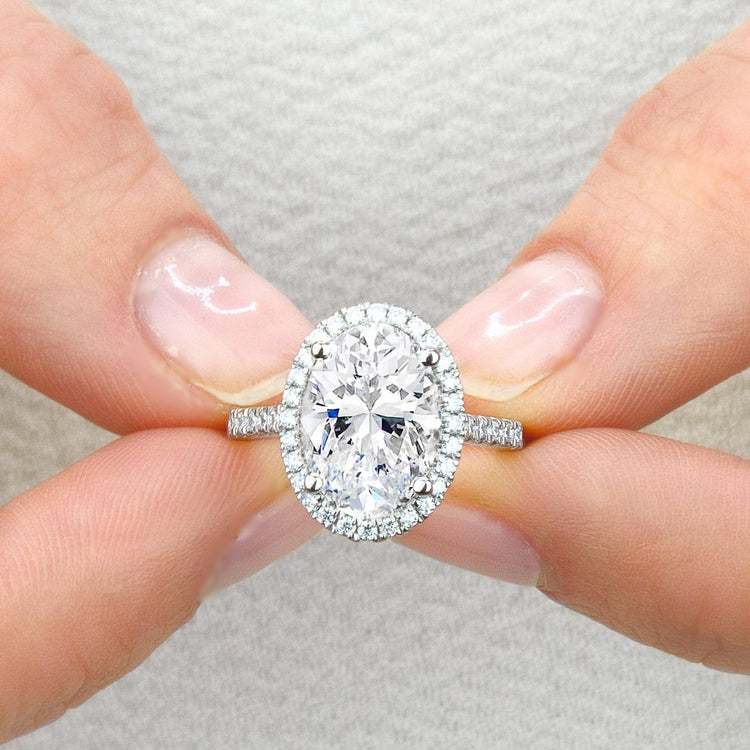
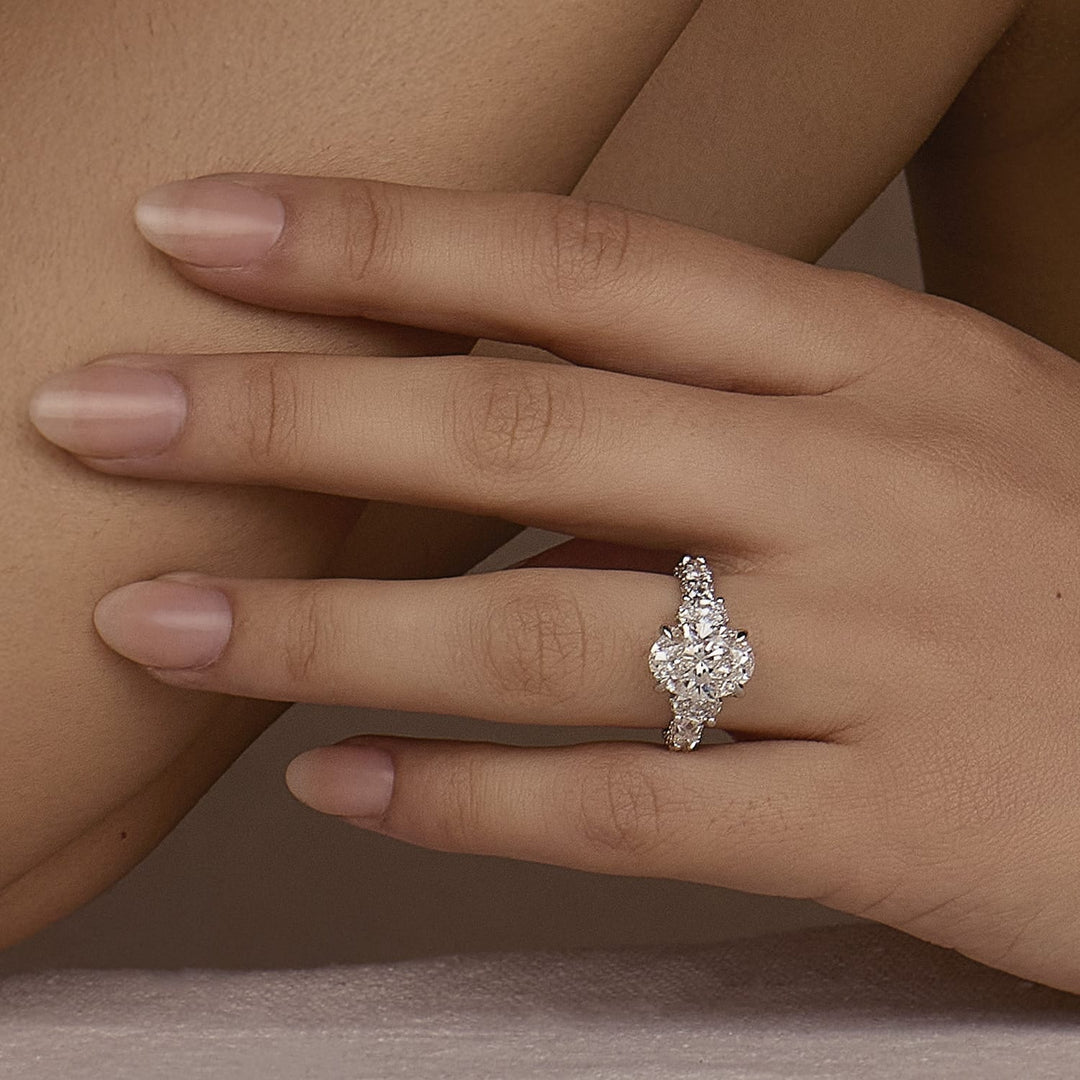
An I color diamond is not automatically too yellow. In many engagement rings, especially well-cut rounds, ovals, and other brilliant-style shapes, an I-color diamond can look beautifully white on the hand.
But there are situations where we would look more carefully: a larger diamond, an emerald cut, a platinum setting, very white side stones, or a client who notices subtle warmth immediately.
At Nazar's & Co. Jewelers, this is rarely a decision we would make from the grading report alone. We would put the I-color diamond beside an H and perhaps a J, move them away from the comparison tray, and then look again in the metal you actually intend to wear.
That is usually when the answer becomes much more personal—and much clearer.
If You Can See the Difference Between H and I, Is H Automatically Better?
Not necessarily.
This is one of the first things that changes once diamonds are compared side by side.
Against an H-color diamond, you may detect a little more warmth in the I. But then we remove the H, place the I on your hand, and suddenly the difference that seemed important in comparison may become almost irrelevant.
That distinction matters.
You are not going to spend the next twenty years wearing an H-color diamond beside your I-color diamond for reference.
So the question becomes: Does the I color look warm to you when you see it as your ring?
If the answer is no, moving to H may buy a higher grade without meaningfully improving what you see.
If your eye keeps returning to the warmer tone, however, we would not talk you out of that reaction. Color sensitivity is real, and some clients notice it quickly.
Where Does I Color Usually Work Especially Well?
The shape tells us a lot.
An I-color round brilliant can be very forgiving because its facet pattern creates considerable brightness and movement. Ovals and cushions can also face up beautifully, although individual stones vary enough that we still want to see the actual diamond.
Emerald cuts deserve a closer look.
Their broad, open facets do not break light into the same kind of scintillation as a round brilliant. You see farther into the diamond, and subtle body color may be easier to notice.
The same grade can therefore produce two very different conversations.
|
If You Are Considering... |
What We Would Look At More Closely |
|
Round Brilliant |
Cut quality and face-up brightness |
|
Oval |
Body color, especially near the ends |
|
Cushion |
Facet pattern and whether warmth concentrates |
|
Pear or Marquise |
Color near the pointed ends |
|
Emerald or Asscher |
Face-up and side-view warmth through open facets |
|
Larger 2ct+ Diamond |
Whether increased size makes color more apparent |
The report gives us the grade. The shape tells us how seriously that grade should influence the decision.
“I Want Yellow Gold—Do I Still Need a Whiter Diamond?”
Often, this is where an I-color diamond becomes particularly attractive.
Yellow gold already creates a warm environment around the stone. A near-colorless diamond can sit very naturally within that palette without appearing yellow.
You can also separate the metal choices.
A yellow-gold band with white-gold or platinum prongs gives you the warmth of yellow gold on the hand while keeping a more neutral frame immediately around the diamond.
That can be a beautiful solution if you love warm metal but still want the center to read as crisp and bright.
Where Preferences Usually Shift
Clients sometimes arrive convinced that yellow gold requires a higher diamond color because they want the center to “stay white.”
Then we place an I-color diamond over yellow gold and compare it with the same stone near white metal.
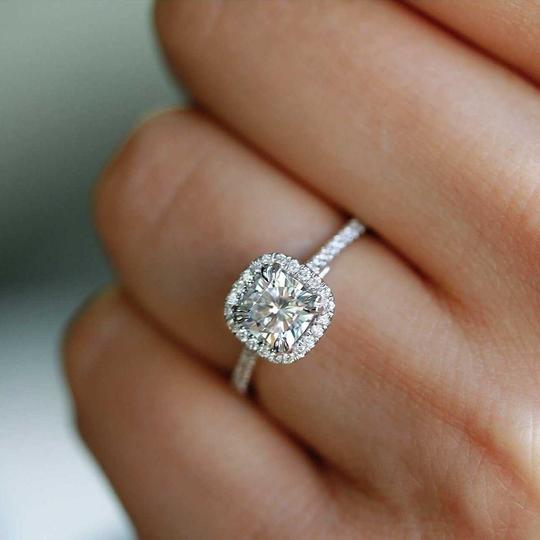
The concern often becomes much smaller once the ring is viewed as a complete design rather than as a loose diamond on white paper.
What If Your Engagement Ring Has a Halo or Side Diamonds?
This is one of the details that can change our recommendation.
Imagine an I-color center diamond surrounded by very white F-color accent diamonds.
You may never have thought the center looked warm until you created that contrast.
Now you see it.
That does not mean the I-color center was a poor choice. It means the side stones changed how your eye reads it.
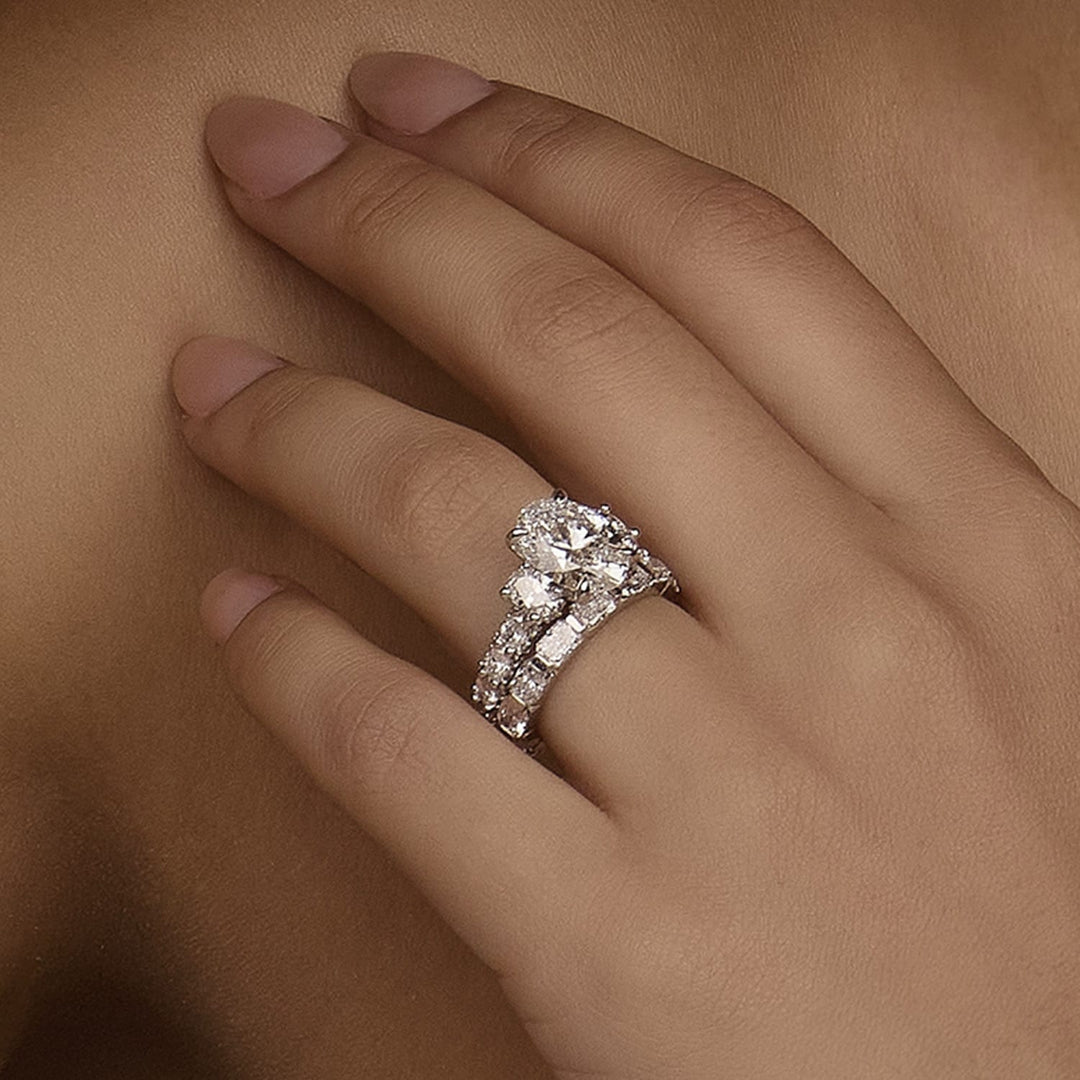
If we are building a three-stone ring, halo, or diamond-intensive setting, we look at how the stones relate visually rather than automatically specifying the whitest possible accents.
Sometimes bringing the side stones slightly closer to the center diamond creates a more harmonious ring.
The goal is not to win a grading contest.
It is to make the complete piece look intentional.
“What If I Go to J Color and Put the Savings Into Size?”
Now we are having the more useful conversation.
Perhaps the choice is not I versus H. Perhaps it is a 1.50ct H, a 1.70ct I, or a beautifully cut 1.85ct J.
On paper, the H has the stronger color grade. On your hand, you may prefer the larger I immediately.
Or perhaps the J shows enough warmth that you keep noticing it, while the I disappears into that comfortable near-colorless range for your eye.
That is where the I grade can become a very effective middle ground.
You are not simply “saving money on color.” You are deciding where the next dollar improves the ring most.
Expert Tip
Once you reach the point where additional color improvement is difficult for you to see without a comparison stone, pause before paying more. That budget may have a more visible effect on cut, size, shape, or the setting.
Does an I Color Diamond Look Different in Different Lighting?
Yes, and this is something worth seeing before you decide.
Diamonds are graded under controlled conditions. Your engagement ring will live in a much less controlled world.
You will see it in daylight, warm restaurant lighting, office lighting, dim evening light, and whatever happens to be coming through the window.
Warm surroundings can make any diamond pick up warmer reflections. A white wall, blue sky, skin tone, clothing, and metal can all influence what your eye perceives.
This is why we would not reject an I-color diamond because it shows a hint of warmth in one specific viewing condition.
We look for consistency.
Does it continue to feel attractive as you move it around?
That is much closer to how you will actually experience the ring.
The Detail People Often Miss: Look at the Diamond From the Side
Most diamond buying happens face-up. Most ring ownership does not.
An open gallery can expose much more of the pavilion from the side. An I-color diamond that faces up very white may reveal slightly more warmth from that angle.
For some clients, that is completely irrelevant.
For others—particularly with a very open solitaire setting—it matters. That is why setting design belongs in the color conversation. A diamond grade does not live independently from the ring built around it.
Nazar's & Co. Jewelers' Perspective on I Color Diamonds
At Nazar's & Co. Jewelers, we would never recommend an I-color diamond simply because someone told you it is a “good value grade.”
We want the actual diamond to earn the recommendation.
We look at its cut, shape, size, face-up appearance, side view, setting metal, and any diamonds that will sit beside it.
Then we ask the simplest question: Do you keep seeing the color—or do you keep seeing the diamond?
If you keep seeing the diamond, I color may be exactly where your money is working efficiently. If you keep seeing warmth, we move higher.
That is a much better answer than deciding from the letter alone.
So, Is an I Color Diamond Too Yellow for an Engagement Ring?
For many engagement rings, no.
An I-color diamond can appear beautifully near-colorless and may allow you to prioritize a larger stone, stronger cut, or more considered setting without sacrificing anything you actually notice.
But compare intelligently.
Look at H, I, and J rather than jumping from I to D. Try the diamond near the metal you intend to wear.
If there will be side stones, view them together. Look from the top and the side.
At Nazar's & Co. Jewelers, that is where the decision becomes much easier.
The right color grade is not the highest letter your budget can reach.
It is the point where moving higher stops making the ring look better to you.