

Should Men's and Women's Wedding Bands Match?

Men’s and women’s wedding bands do not need to match exactly. The strongest pairings usually share one or two intentional details—such as metal color, finish, engraving, or design language—while allowing each person to choose the width, profile, stones, and comfort that suit them individually.
For couples choosing wedding bands at Nazar's & Co. Jewelers in Houston, this is often where the decision becomes easier.
You do not have to choose between “identical” and “completely different.”
A slim diamond band can coordinate beautifully with a wider satin-finished band. Yellow gold can connect two very different designs. Even an engraving hidden inside both rings can create the link.
The better question is: what do you want your two rings to have in common?
What Does It Actually Mean for Wedding Bands to Match?
Matching wedding bands can mean several things.
The rings might have the same:
-
Metal
-
Color
-
Finish
-
Edge detail
-
Engraving
-
Diamond or gemstone accent
-
Design motif
They do not need to have the same width or silhouette.
This distinction matters because two identical rings may not look equally balanced on two different hands.
A 3 mm polished band may feel substantial on one person and almost invisible on another. A 6 mm band may look perfectly proportioned on a larger hand but feel too wide or restrictive on a smaller finger.
Coordination gives you more freedom than duplication.
When Do Identical Wedding Bands Work Well?
Matching bands can be beautiful when both of you genuinely like the same design.
A pair of classic yellow gold bands, for example, can feel timeless precisely because there is so little visual difference between them.
Exact matching tends to work best when you agree on:
-
The same metal
-
Similar preferred widths
-
The same finish
-
Minimal or understated design
-
Comparable comfort preferences
But do not choose identical bands simply because they seem more symbolic.
If one person wants a 2.5 mm high-polish band and the other prefers a 6 mm brushed band, forcing both into the same ring usually creates a compromise neither person needed to make.
How Can Wedding Bands Coordinate Without Looking Identical?
This is where we often find the most satisfying solution.
Choose one shared element, then let the rest change.
|
Shared Detail |
How the Rings Can Still Differ |
|
Yellow Gold |
Different widths and finishes |
|
Platinum |
Plain band paired with diamond band |
|
Satin Finish |
Different profiles or edge details |
|
Engraving |
Completely different exteriors |
|
Diamond Detail |
Different number or placement of stones |
|
Two-Tone Design |
Different proportions of each metal |
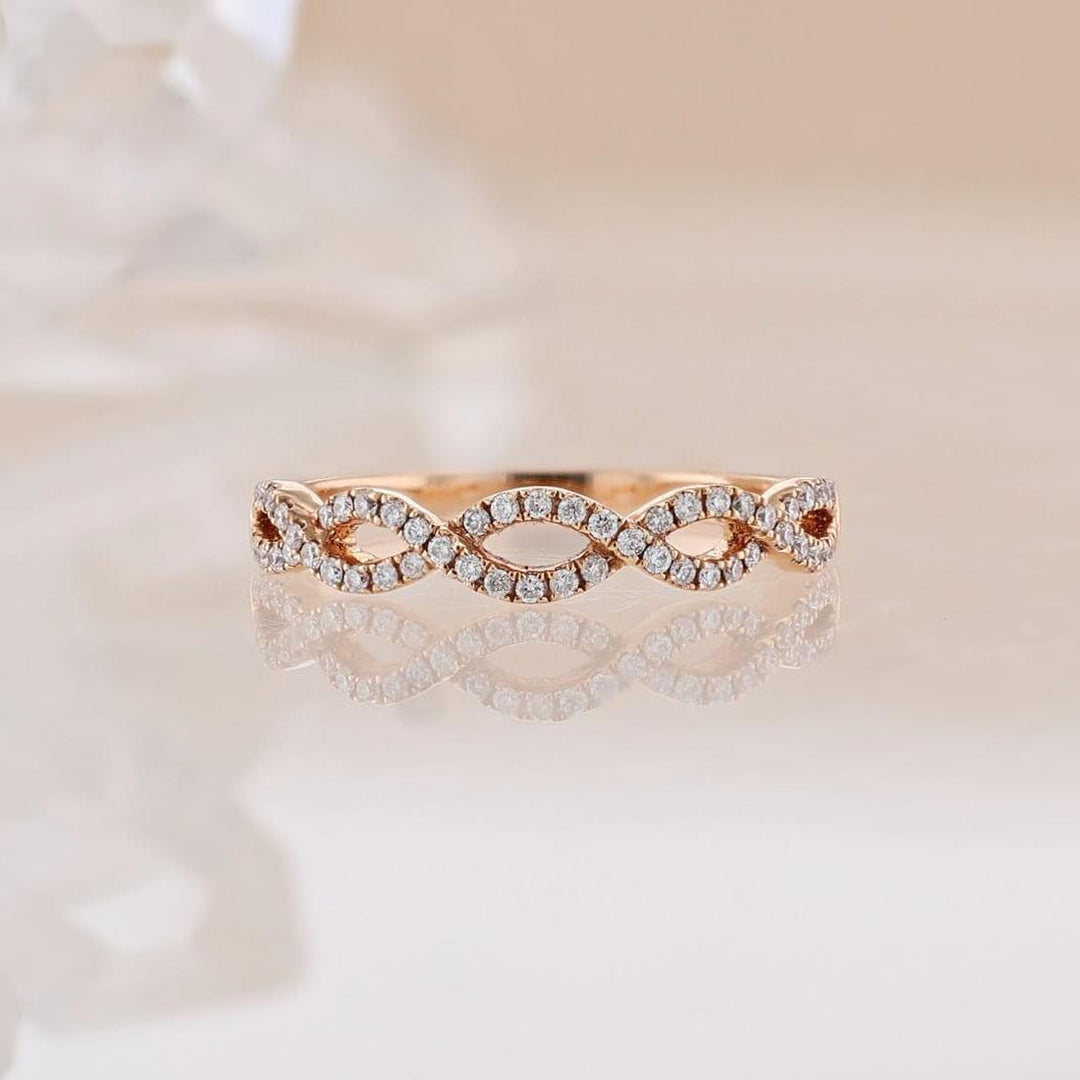
For example, one partner might choose a yellow gold diamond eternity band while the other chooses a wider yellow gold ring with a brushed center.
They clearly belong together.
They simply do not look like the same ring in two sizes.
Should the Women's Wedding Band Match the Engagement Ring First?
Usually, this deserves attention before matching the partner’s band.
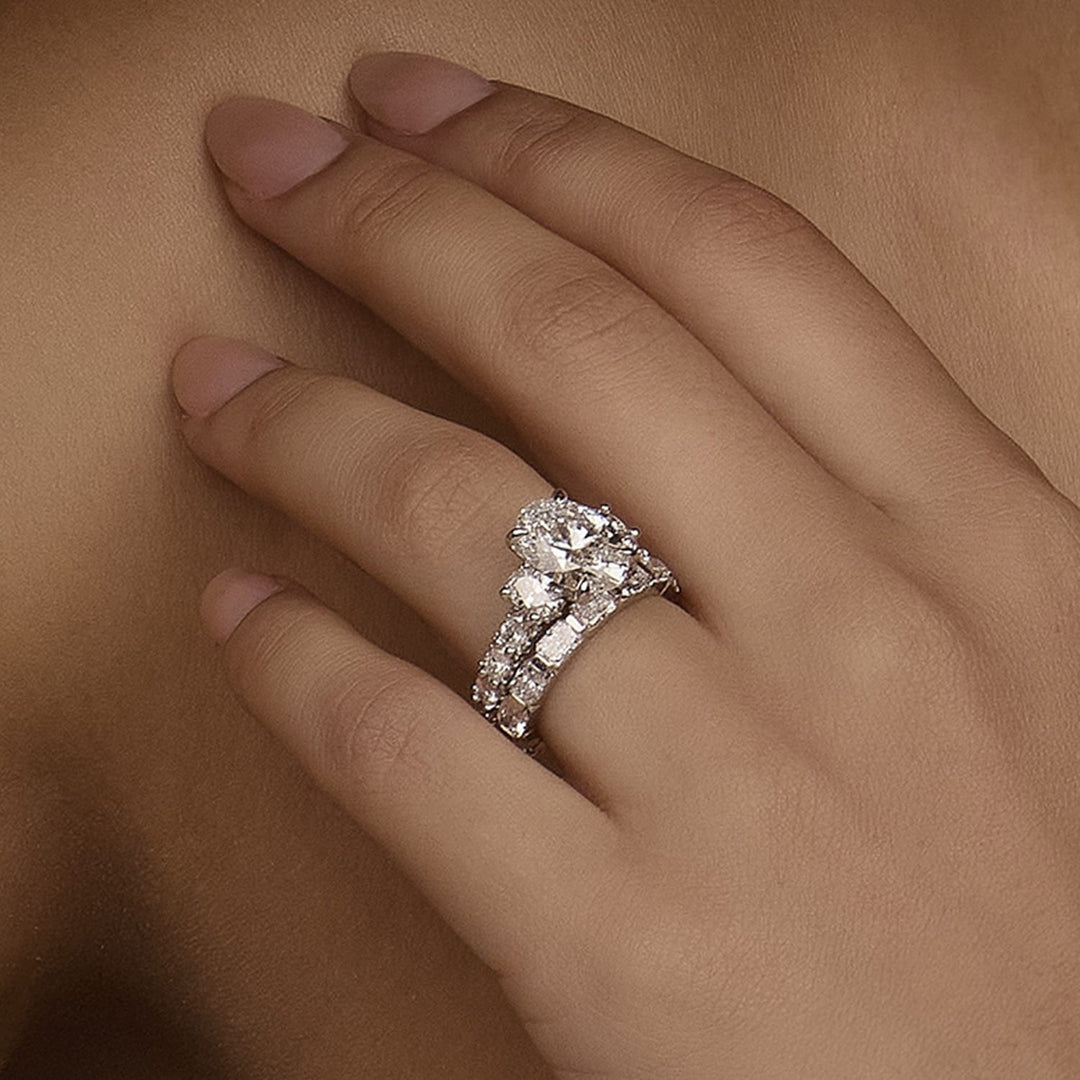
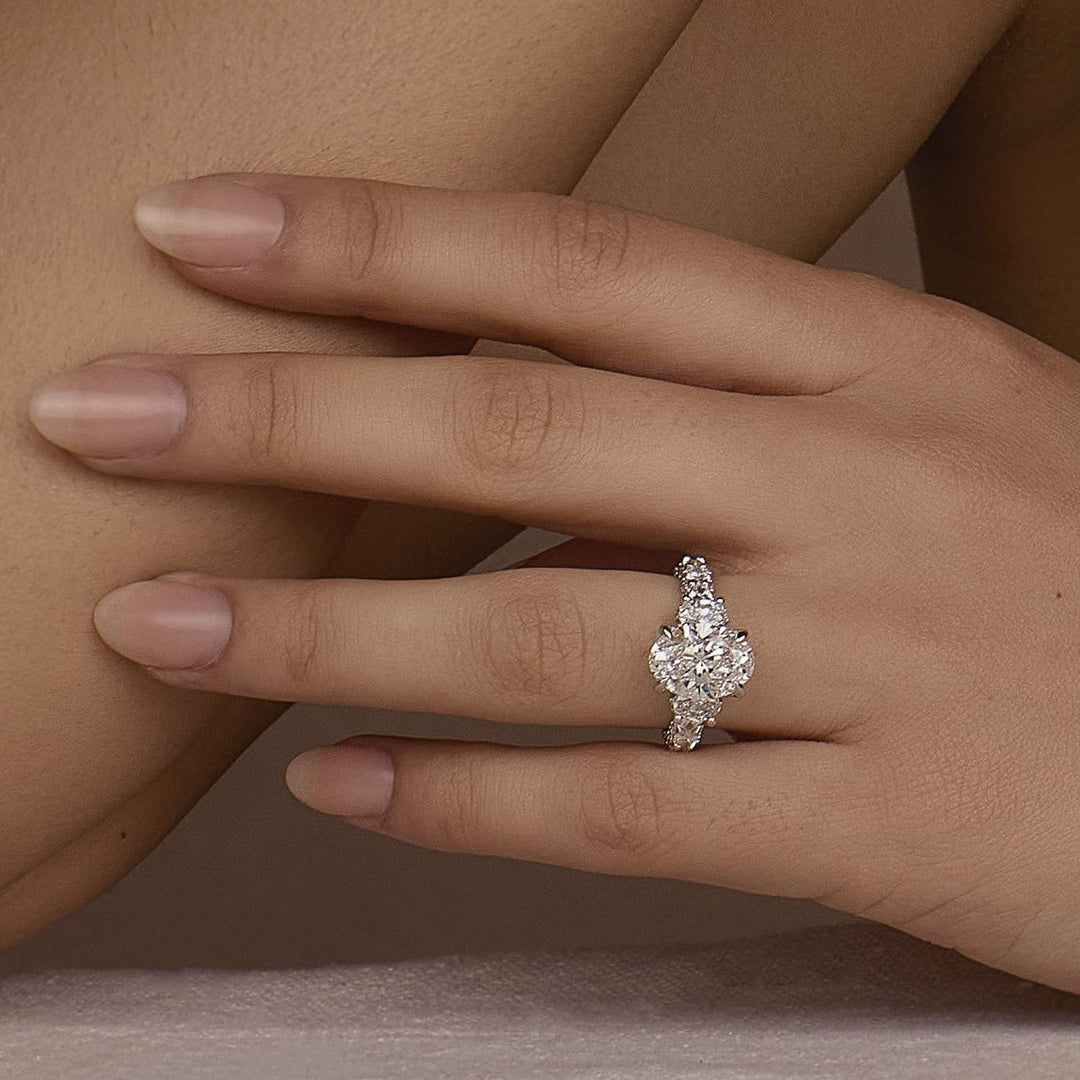
The wedding band and engagement ring may be worn beside each other every day, so they need to work physically as well as visually.
Look at:
Height
If the engagement-ring setting sits low, a straight wedding band may not sit flush against it.
Shape
Some engagement rings need a curved, contoured, or notched band to fit around the center setting.
Width
A very substantial wedding band can change the balance of a delicate engagement ring.
Metal
You can match the metal exactly, or intentionally introduce contrast.
The engagement ring does not have to dictate everything.
But it should be part of the conversation.
Do the Metals Have to Match?
No.
Mixed-metal wedding bands can look intentional and sophisticated.
One person may strongly prefer platinum or white gold while the other has always worn yellow gold.
There is no design rule requiring either person to give that up.
If you want more visual connection, introduce a small crossover.
A white gold band might include yellow gold edges.
A yellow gold ring may use a white metal detail.
Or both rings can share the same finish even though the metals differ.
The Question We Ask First
Are you trying to make the rings look related, or are you trying to make each ring feel right for the person wearing it?
Ideally, you can do both.
But when those priorities conflict, we usually protect comfort and personal preference first.
You will notice your own wedding band far more often than you will see the two rings sitting beside each other.
Should Men's Wedding Bands Be Wider?
They often are, but they do not have to be.
Men’s bands are frequently offered in wider proportions such as 5 mm, 6 mm, or more, while women may prefer narrower widths, particularly when stacking with an engagement ring.
But finger size, hand proportions, design, and comfort matter more than gender labels.
Try different widths.
-
A change of only 1 or 2 mm can make a ring look and feel significantly different.
-
Also compare profiles.
-
A flat band can feel modern and architectural.
-
A softly rounded band may feel more traditional.
-
A comfort-fit interior can make a wider ring noticeably easier to wear.
This is one of those decisions that becomes clearer on the hand than on a product page.
What If One Person Wants Diamonds and the Other Does Not?
That is one of the easiest differences to coordinate.
A diamond wedding band can pair naturally with a plain metal band if another detail connects them.
You could use:
-
The same metal
-
Matching polished edges
-
The same width proportion
-
A shared engraved line
-
One subtle diamond in the simpler band
The question is not whether both rings contain stones.
It is whether each ring feels deliberate.
Can Gemstones Connect the Two Wedding Bands?
Absolutely.
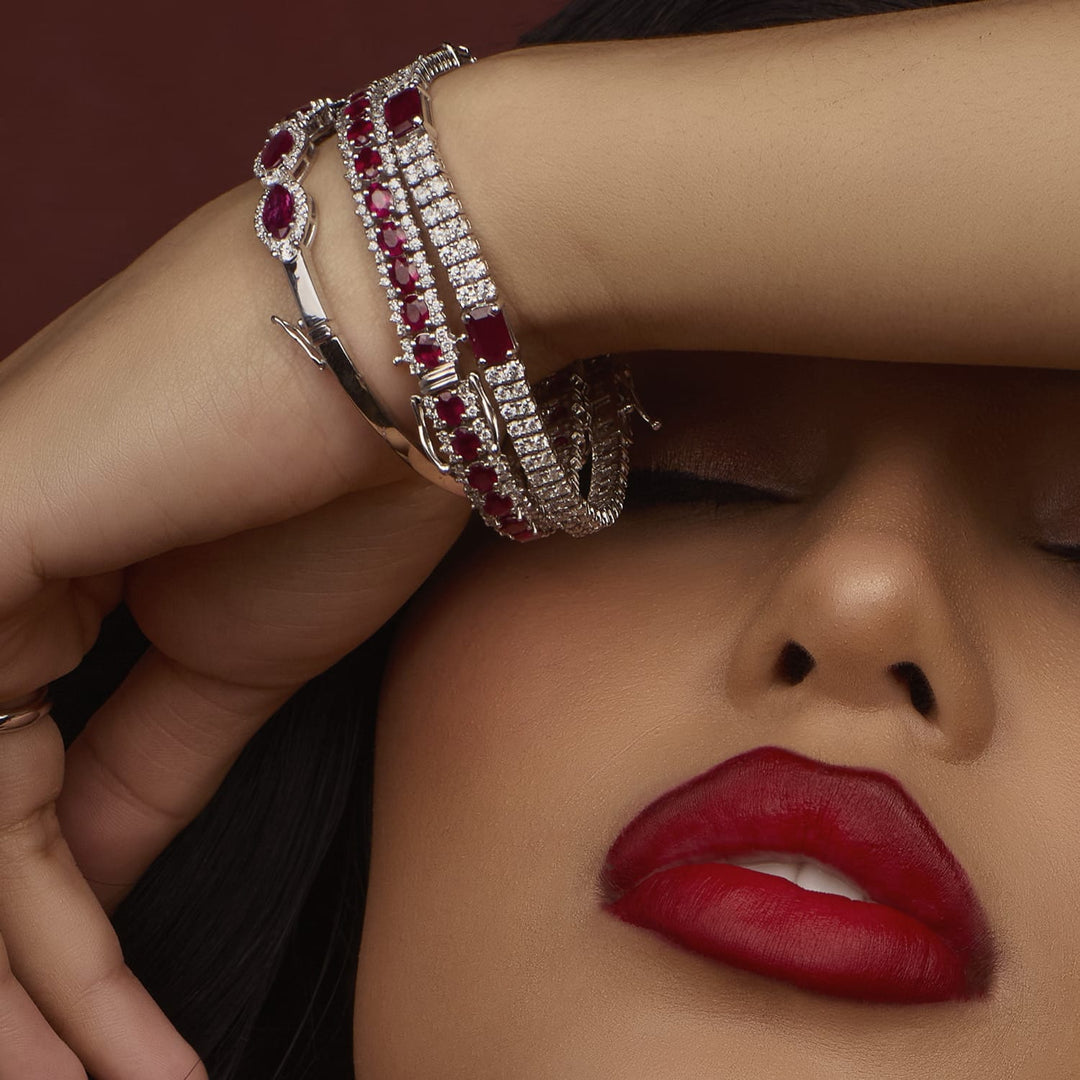
A sapphire, ruby, emerald, or diamond accent can create a subtle shared detail without making the rings identical.
This works particularly well when color has personal meaning.
One band might have visible gemstone accents, while the other incorporates a single stone inside the band or within a restrained design element.
The key is restraint.
A shared gemstone should connect the rings, not force two different personal styles into the same design.
What If Your Styles Are Completely Different?
Then let them be different.
One of you may prefer vintage detail.
The other may want a clean, contemporary band.
One may choose rose gold.
The other may prefer platinum.
The connection between wedding bands does not have to be immediately visible.
This is where custom jewelry creation becomes especially useful.
A shared engraving, date, texture, hidden gemstone, or small design motif can connect two rings that look entirely different from the outside.
What Matters More Than It Seems
The private detail can sometimes feel more personal than an obvious matching set.
Your rings do not need to explain their relationship to everyone else.
They need to mean something to you.
Should You Choose Wedding Bands Together?
Whenever possible, yes.
Not because the rings must coordinate, but because seeing them together helps you understand the relationship between them.
Place both rings on the hand.
Then place the engagement ring beside the wedding band.
Compare widths.
Try different finishes.
Look at yellow gold beside white gold.
Try the simple band you thought would be too plain.
Then try the diamond band you thought might be too much.
Preferences often shift quickly once the rings leave the display and go onto your hands.
The Nazar's & Co. Jewelers Perspective
At Nazar's & Co. Jewelers, we think matching wedding bands work best when the connection feels intentional rather than obligatory.
Sometimes that means two identical gold bands.
Sometimes it is a diamond band beside a satin-finished men's ring.
Sometimes only the engraving connects them.
And sometimes two completely different rings are exactly right.
The goal is not to make your wedding bands look like a manufactured pair.
It is to find two rings you will both want to wear—and decide whether there is a detail worth sharing between them.
That is a much more personal kind of match.