



What is the Difference Between a Necklace and a Pendant?

A necklace is the complete piece of jewelry worn around your neck. A pendant is the decorative element that hangs from a chain or necklace.
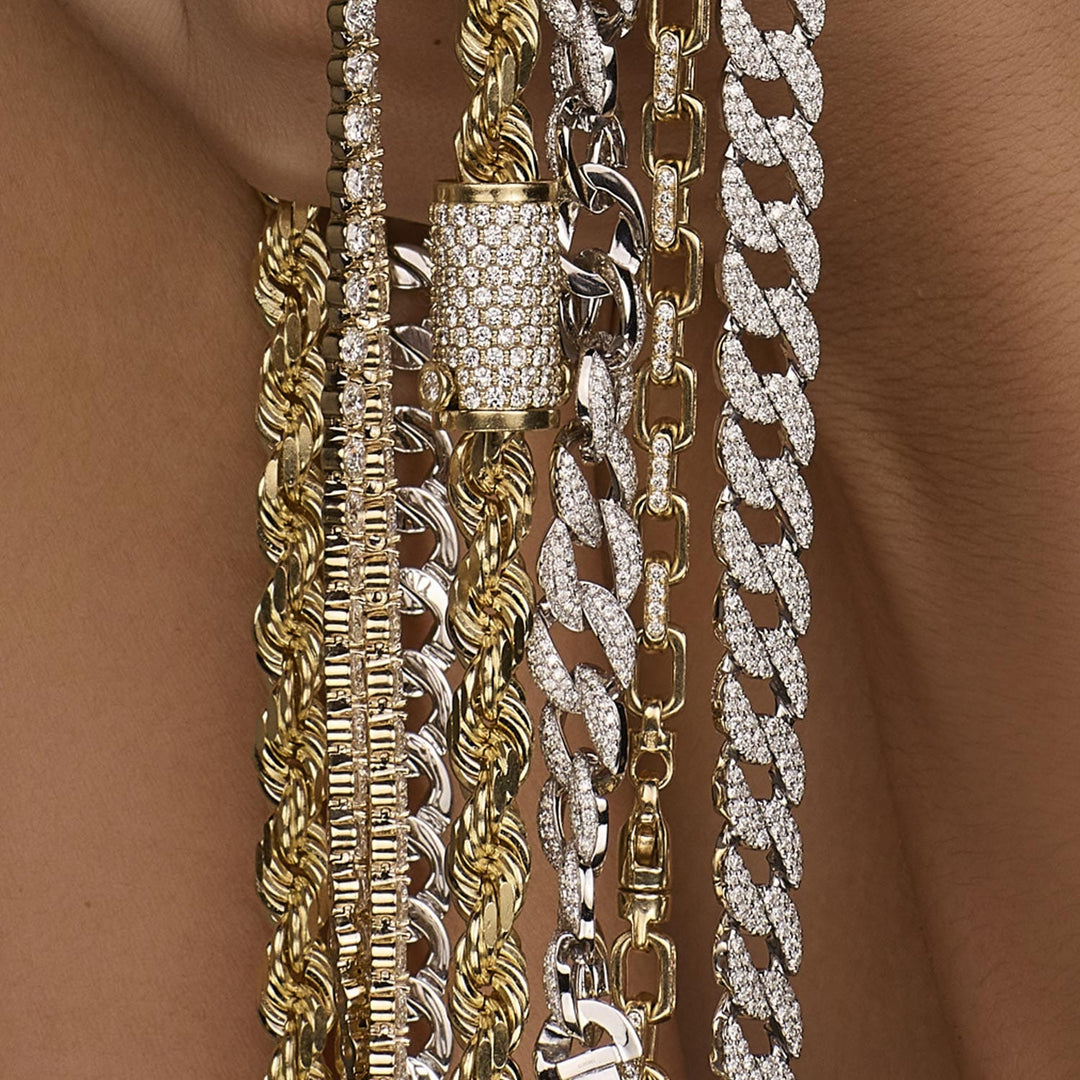
That means a necklace can exist without a pendant. A diamond tennis necklace, pearl strand, or gold chain is still a necklace. A pendant, however, usually needs a chain to be worn.
At Nazar's & Co. Jewelers, this distinction becomes most useful when you are actually choosing a piece. You may already own a chain and want to add a pendant. Or you may love a pendant but need to know which chain length, weight, and style will make it sit correctly. That is where the details begin to matter.
Is a Pendant the Same as a Pendant Necklace?
Not exactly.
The pendant is the ornament itself. The pendant necklace is the pendant together with the chain.
A solitaire diamond pendant, for example, may slide freely on a chain. You may be able to remove it and wear it on another chain later.
Other designs are built as one complete necklace. The decorative center may be permanently attached to the chain.
That difference affects how flexible the piece will be.
If you like changing chain lengths or styling the same pendant in different ways, a removable pendant may suit you better.
If you want the proportions and movement to remain exactly as designed, an integrated necklace may be the stronger choice.
Can You Put Any Pendant on Any Chain?
No.
The first thing we check is whether the chain can pass through the pendant's bail, which is the loop that connects the pendant to the chain.
A chain may be thin enough, but the clasp may still be too large to pass through.
Then we consider weight.
A very fine chain may look elegant with a small diamond pendant, but it may not be appropriate for a heavier gemstone or substantial gold piece.
The opposite can happen too. A thick chain can overpower a small pendant and make the proportions feel unbalanced.
What We Look at First
When you bring in a chain and ask whether a pendant will work with it, we look at four things:
-
The chain width
-
The clasp
-
The bail opening
-
The pendant's weight
If those four elements work together, the piece will usually look and wear much better.
Does the Chain Really Change How the Pendant Looks?
Very much.
The chain determines where the pendant sits and how much attention it receives.
A small diamond pendant on a fine chain keeps the focus almost entirely on the stone.
Place the same pendant on a more substantial gold chain, and the chain becomes part of the design.
Length matters too.
An 18-inch pendant may sit near the collarbone. A longer chain creates a more relaxed look and may work better with different necklines.
There is no single correct length. The right one depends on where you want the pendant to fall and what you normally wear.
|
If You Want... |
Pay Attention To... |
|
The pendant to be the focal point |
A fine, understated chain |
|
To support a heavier pendant |
Chain strength and clasp quality |
|
To switch chains later |
Bail opening and attachment style |
|
A shorter, more visible look |
Where the chain sits on your neckline |
|
To layer several pieces |
Different lengths and visual weights |
|
To reuse an heirloom pendant |
Condition of the bail and existing attachment |
Why Does My Pendant Keep Flipping Over?
This is a common question once the piece is actually being worn.
The cause is often balance.
A pendant may flip if its weight is concentrated too far forward or to one side. The position of the bail can also affect how naturally it hangs.
A very light pendant on a stiff chain may move more than expected.
This is why a pendant that looks perfect while lying flat may behave differently once you begin walking, turning, or sitting.
If the piece flips constantly, the solution may involve changing the chain, adjusting the bail, or modifying the construction.
With custom jewelry creation, these details can be planned from the beginning.
Can You Put an Old Pendant on a New Chain?
Usually, yes. This is especially common with inherited jewelry.
You may love the pendant itself but no longer like the chain. Or the original chain may be worn, too short, or simply not your style.
Before changing it, we look closely at the pendant's attachment point.
The bail may have worn thin after years of use. If so, putting the pendant on a brand-new strong chain does not solve the real problem.
The old bail could still fail.
Care Tip
Before wearing an heirloom pendant on a new chain, have the bail inspected. It is a small part of the piece, but it carries the entire pendant.
You may also decide that the pendant deserves more than a new chain.
An older gemstone can sometimes be incorporated into a completely new necklace while preserving the part of the jewelry that matters most to you.
What Is the Difference Between a Pendant Necklace and a Diamond Necklace?
The main difference is where the visual emphasis sits.
-
A diamond pendant necklace usually has one central focal point.
-
A diamond necklace may place diamonds across a larger section of the neckline.
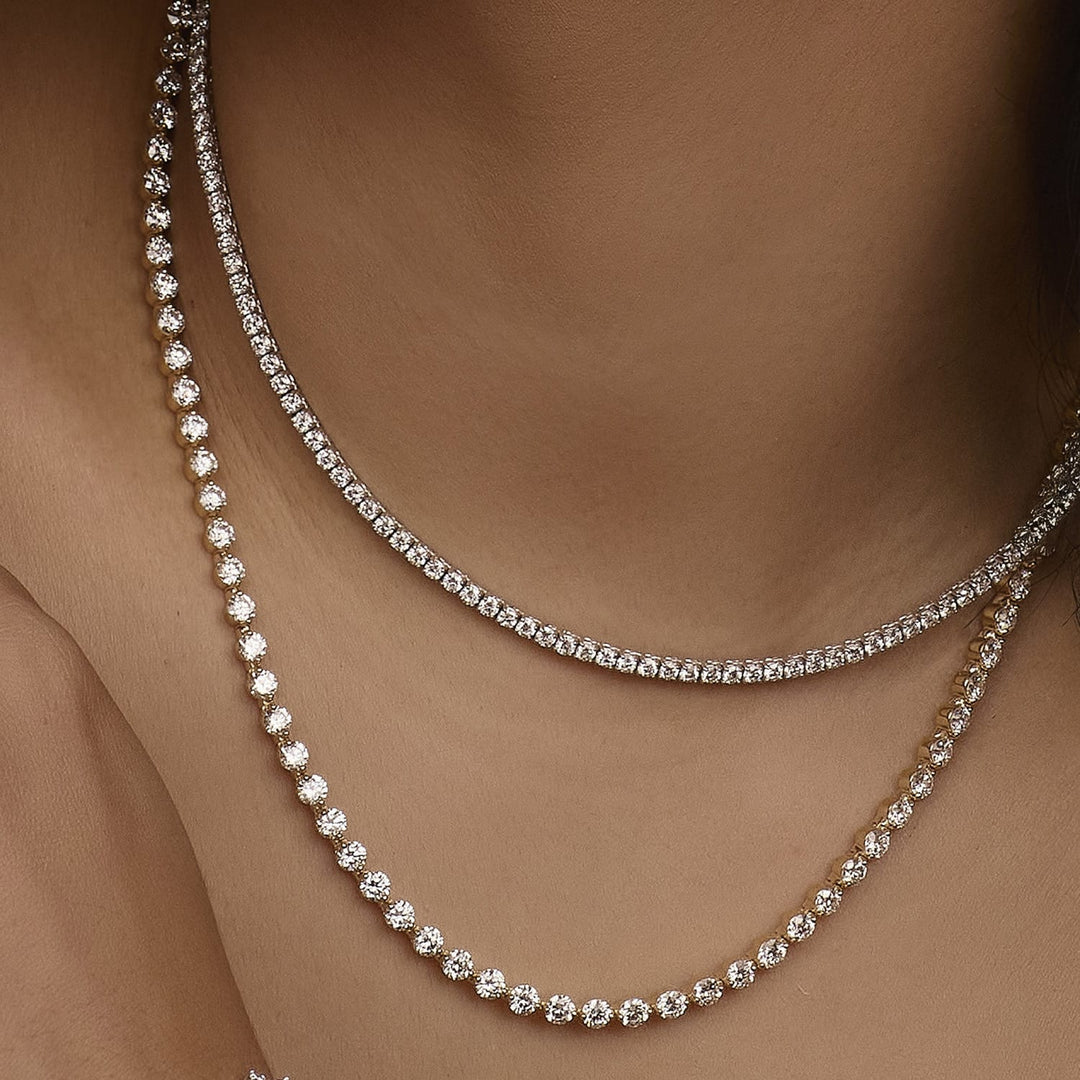
Think about a solitaire diamond pendant compared with a tennis necklace.
The pendant draws your eye to one place.
The tennis necklace creates a continuous line of diamonds.
Both can be elegant. They simply create different effects.
If you like a clean, focused look, a pendant may feel more natural.
If you want the diamonds to become the entire composition, a necklace may be the better direction.
Which Is Easier to Layer?
Pendant necklaces can work especially well in layered looks because they create a clear focal point.
For example, you might wear a shorter gold chain with a longer diamond pendant below it.
The important part is creating enough separation between the pieces.
Chains that are almost the same length tend to overlap and tangle more easily. Two large pendants can also compete visually.
A more balanced layered look usually varies at least one element: length, chain weight, texture, or pendant size.
You do not need every piece to have equal visual importance.
Nazar's & Co. Jewelers' Perspective on Necklaces and Pendants
At Nazar's & Co. Jewelers, one of the first things we consider is how much flexibility you want.
-
Do you want one pendant that can move between several chains?
-
Do you want the entire necklace to remain exactly as designed?
-
Are you working with an heirloom pendant?
-
Do you want to layer the piece with jewelry you already own?
Those answers often tell us more than the words necklace or pendant alone.
The best result comes from treating the pendant, chain, length, weight, and attachment as parts of the same design.
So, What Is the Difference Between a Necklace and a Pendant?
The distinction is simple: A necklace is the complete piece worn around your neck. A pendant is the decorative element that hangs from it.
From there, the more useful questions begin.
Will your existing chain support the pendant? Will the bail fit over the clasp? Does the length place the pendant where you want it? Is an older attachment still secure?
If you are choosing a new piece, matching a pendant with a chain, or redesigning heirloom jewelry, Nazar's & Co. Jewelers can help you look at those details together.
A beautiful pendant deserves more than a chain that simply fits.
It deserves one that makes the whole piece feel right.